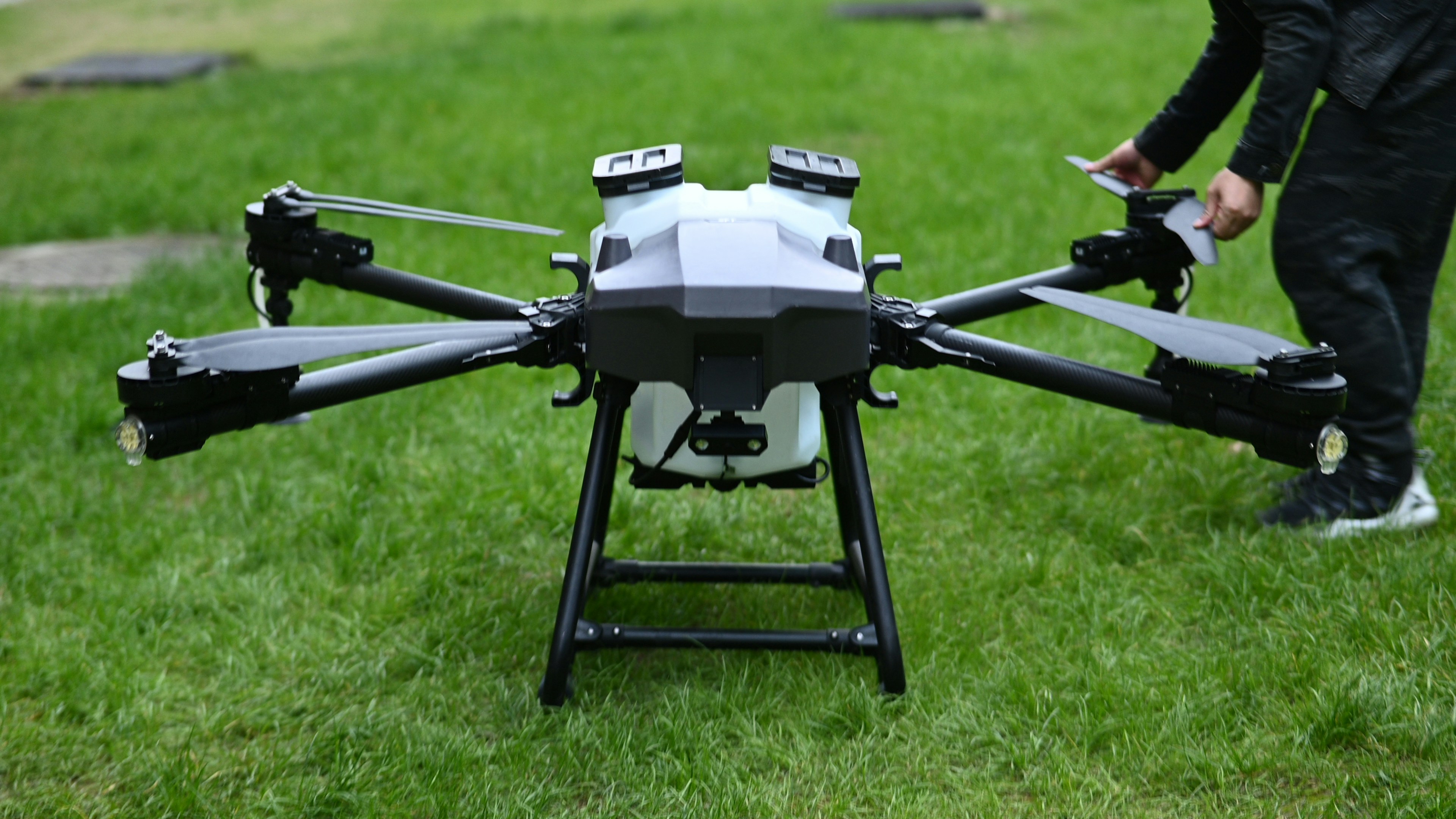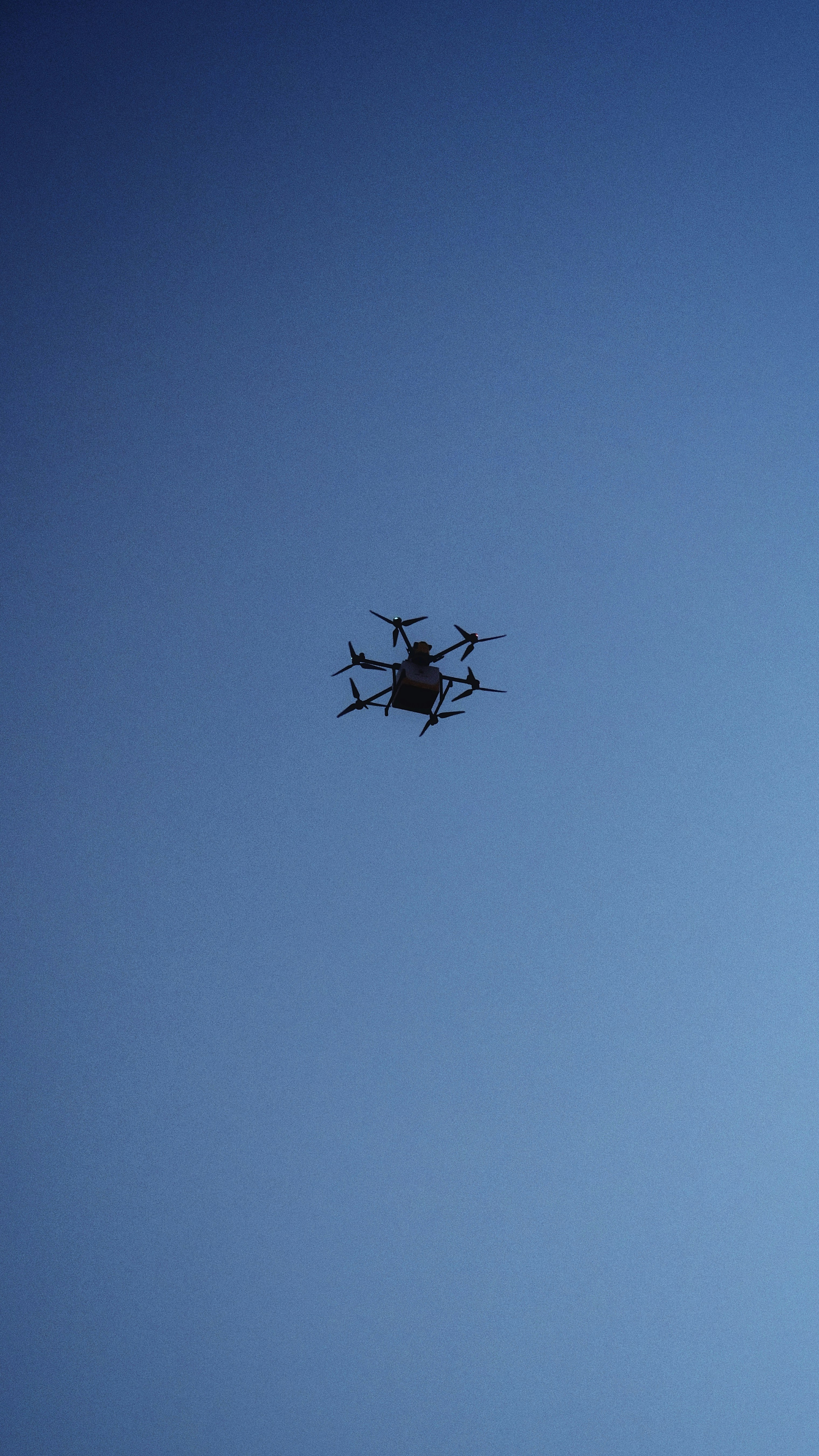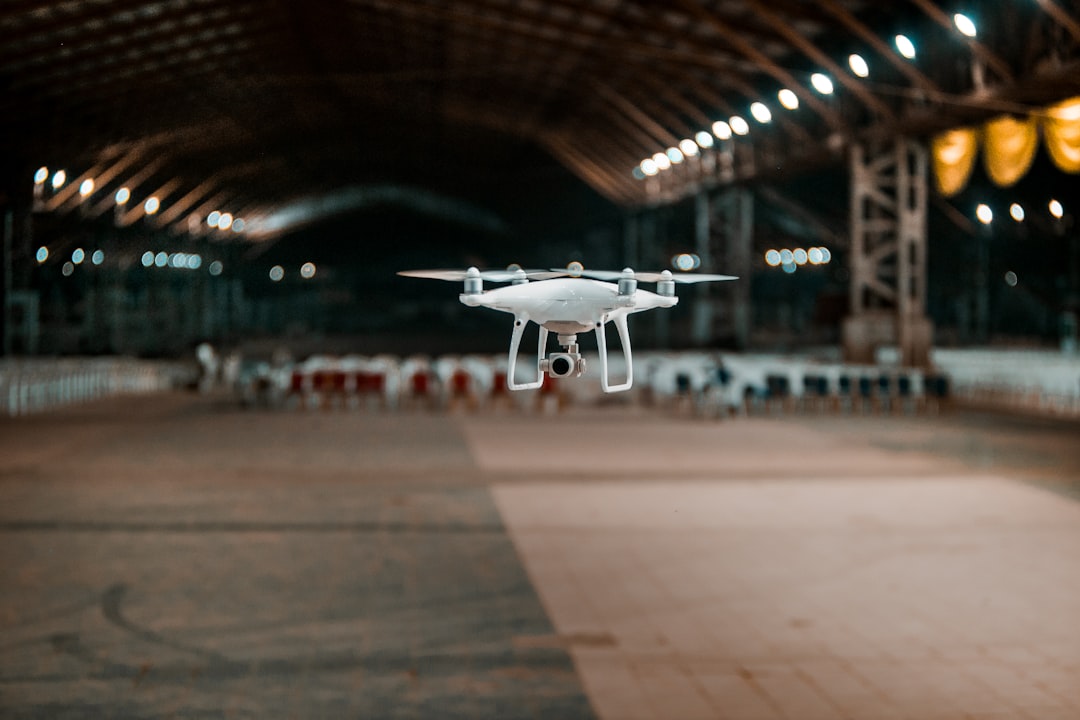
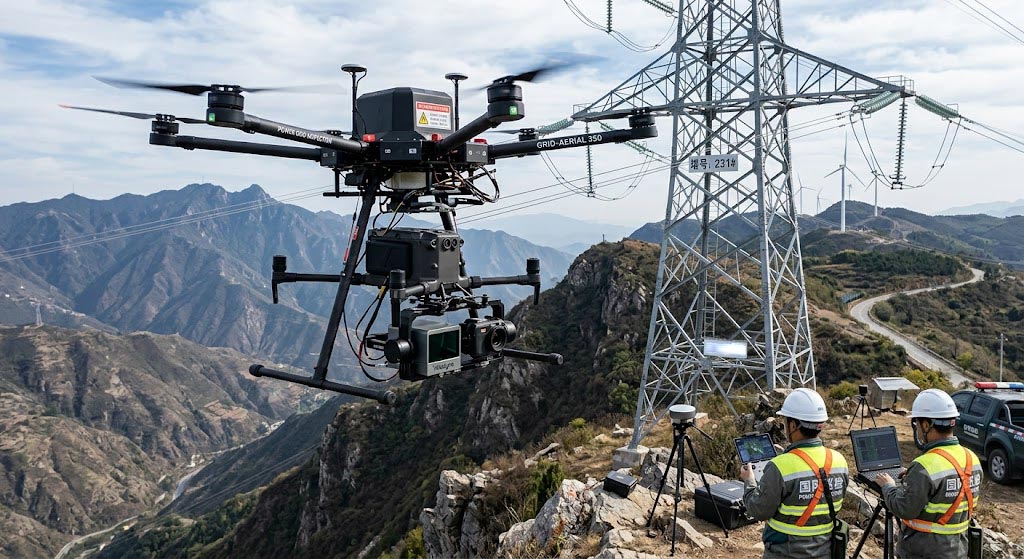
Selecting a 4-ton-class industrial UAV isn't about comparing spec sheets. Pick the wrong configuration and your project cost doubles. At this scale, you're operating in the same weight class as a light helicopter — and physics starts constraining every design decision without room for negotiation. Battery energy density, the square-cube relationship between structural weight and lift, and takeoff/landing site requirements: each one is a hard boundary.
1. Why 4 Tons Is a Physics Watershed
Once your mission payload exceeds 2 tons, the weaknesses of conventional multirotor architectures become impossible to ignore:
Battery energy density hits the ceiling: mass-produced lithium batteries currently top out around 300 Wh/kg. In real-world flight, this translates to full-load endurance compressed to under 15 minutes — not enough time to complete a single full work cycle for most industrial missions.
Structural load grows non-linearly: the square-cube law dictates that as airframe dimensions scale up, structural weight grows cubically while lifting surface area only grows quadratically. Standard carbon fiber arms enter the deformation risk zone at 4-ton loads. Section modulus and fatigue life need to be recalculated from scratch.
Takeoff and landing requirements tighten dramatically: a small UAV can operate off a flat concrete pad. At 4 tons, rotor downwash velocity and ground effect demand a reinforced runway or dedicated launch system. Improvised site selection becomes far less viable.
The main demand drivers cluster around: forest firefighting with simultaneous water agent and fire-retardant bomb payloads, power line construction requiring hoisting of large insulators and crossarms, and precision cargo airdrops in mountainous terrain. Most commercially available platforms that balance reliability and cost sit in the 1–3 ton range. Beyond 4 tons, you're typically looking at custom development.
2. The Two Physical Ceilings on Payload and Endurance
Two fundamental constraints define the performance ceiling at this weight class:
1. The square-cube law: as the airframe scales up, the lift surface area (quadratic growth) can't keep pace with structural volume and weight (cubic growth). The result — bigger gets less efficient. Every additional kilogram of payload demands a disproportionately larger structural weight penalty.
2. Battery energy density bottleneck: production lithium cells cap out at roughly 300 Wh/kg. This number is pressing against the limits of current electrochemical chemistry. Solid-state batteries may break through if they reach mass production — but until then, every large-lift electric UAV operates under the same ceiling.
Three tradeoffs follow directly from these limits:
Add more battery capacity → battery self-weight eats into net payload
Reinforce the airframe → added structural mass further compresses available payload
Adopt a hybrid layout (e.g., VTOL fixed-wing) → transition-phase energy burn offsets part of the cruise efficiency gain
Real-world operating conditions layer on additional penalties:
At wind speeds above Beaufort 6, usable payload drops measurably below the spec-sheet figure
High-altitude operations reduce air density, cutting rotor lift and motor output significantly
3. Multirotor or Fixed-Wing? The Mission Decides the Architecture
Dimension | Multirotor | Fixed-Wing
Typical payload range | 1–5 tons | 3–8 tons
Endurance | 15–30 min | 1–2 hours
Takeoff/landing footprint | 5×5 m hard surface | 50 m runway or catapult
Best fit | Precision hoisting / point delivery | Long-range cargo transport
Where multirotors win: construction site equipment lifting, disaster-zone emergency supply drops, power line maintenance requiring stable hover.
Where fixed-wing wins: cross-mountain medical supply delivery, long-distance pipeline inspection, border outpost resupply.
For missions that need both precision positioning and long endurance, evaluate a mixed-fleet approach: multirotors handle the terminal-phase operation, fixed-wing covers the segment transport. Two airframes, one mission profile, split by what each does best.
DJI has built a mature "airframe + third-party payload" ecosystem in the small-to-medium lift segment (Matrice, Agras, and FlyCart series, covering approximately 2.7 kg to 50 kg payload) through the PSDK interface standard. The 4-ton class has no equivalent common interface ecosystem — each manufacturer runs a proprietary mounting protocol and closed mechanical interface. What this means in practice: once you commit to a particular vendor's platform, your downstream payload expansion options are locked in.
4. Beyond the Airframe: Three Supporting Systems
Subsystem budgets for large-lift UAVs need to be planned before the purchase, not after:
1. Energy management
High-capacity battery packs require dedicated industrial chargers. Consumer-grade charging solutions don't apply.
A dual-battery hot-swap module keeps operations continuous. In winter conditions, battery thermal wraps are mandatory.
2. Obstacle avoidance upgrade
Standard avoidance modules have limited detection of high-voltage lines and thin-gauge wires. Augment with millimeter-wave radar.
Night operations require IR illumination. Vision-based systems fail in zero-light conditions.
3. Ground station hardening
Standard remote controllers suffer severe signal degradation behind terrain obstructions. Deploy a 4G/5G dual-link relay.
For large-lift missions, a dual-operator ground station setup — one pilot on flight controls, one operator on payload — is the practical minimum.
5. Maintenance Realities at Scale
Propellers: check dynamic balance on a regular schedule. After high-load sorties, inspect blade roots specifically — subsurface cracks invisible to the naked eye require non-destructive testing to catch.
Motors: after sustained high-power runs, allow adequate cooling time before the next flight. Permanent magnet demagnetization from overheating is irreversible.
Load distribution: CG offset directly impacts roll stability. Large-lift airframes have a far narrower tolerance for CG shift than consumer drones.
Transport and storage: avoid direct contact between carbon fiber airframe components and metal support fixtures. Galvanic corrosion accelerates in humid environments.
Selecting a 4-ton-class UAV comes down to finding the lowest-cost engineering solution within the boundaries physics has already drawn. Power line construction? Prioritize electromagnetic interference resistance. Forest firefighting? Prioritize rapid-deployment efficiency. Logistics? Prioritize the product of range and payload. If you have the option, validate real-world performance data through a lease program first — then use measured parameters as your procurement baseline.